Cardiac apprehension does not send a schedule welcome. It occurs in cooking areas and car parks, on sporting activities fields and . Minority mins in between collapse and the arrival of paramedics are unrelenting. The appropriate kind of training can tilt those minutes in your favour. The question many people deal with is not whether to find out CPR, however which degree obviously makes sense for their role, their risk setting, and their confidence.
I have shown and supervised both standard and advanced CPR training in workplaces, schools, and clinical setups. The most effective match is hardly ever about ego or ambition. It is about the probability of the emergencies you will deal with, the devices you will certainly have, and the team you will be part of. This overview breaks down the genuine differences between standard and advanced programs, where the overlap lies, and exactly how to pick with your eyes open.
What "fundamental" and "advanced" in fact mean
In first aid and CPR training, labels can blur in between service providers. Basic training courses cover adult CPR and AED usage, typically with kid and baby modules included. Advanced programs add rhythm recognition, air passage adjuncts, bag-mask air flow, and team-based resuscitation. In health care, advanced implies going deeper: algorithms for heart attack, respiratory failing, and peri-arrest situations with medicines and monitoring.
For the general public, a solid first aid and cpr course focuses on high-quality chest compressions, rescue breaths or compression-only methods, secure AED procedure, choking response, healing setting, and scene evaluation. It aims to obtain you from no to efficient within a day. Numerous employers request a first aid certificate that consists of CPR. These first aid courses often run 6 to eight hours, combine practical drills with short assessments, and comply with country wide recognised standards from resuscitation councils.
Advanced CPR courses are developed for clinical groups and marked -responders in high-risk environments. They presume familiarity with standard CPR and include intricacy. Instances include bag-valve-mask air flow with an oropharyngeal air passage, two-rescuer worked with compressions and respirations, keeping an eye on oxygen saturation and capnography if offered, manual defibrillation for trained medical professionals, and algorithm-driven look after shockable and non-shockable rhythms. The mentor runs longer, the situations are extra technological, and the evaluation is stricter.
The type in all of this: even more web content does not automatically suggest better preparedness for your setup. The best cpr course is the one that optimizes what you can reasonably do in your environment with the tools you will actually have.
The stakes, by the numbers
Defibrillation within three mins can press survival from shockable rhythms above half in some area studies. Every min without CPR or defibrillation goes down survival by approximately 7 to 10 percent. High-grade onlooker compressions double or triple survival possibilities compared to doing nothing. Those are the numbers that matter, and they sit squarely in the ability of a well-run standard cpr training session.
Advanced interventions, when done by practiced teams with the best equipment, raise the ceiling further in health centers and fully equipped facilities. But outside those setups, an overstuffed ability checklist that rots quickly can end up being false comfort. Your decision needs to focus on maintaining skills over time.
Who commonly requires which level
I commonly start decisions with a straightforward map of duties versus likely devices and teams.
- Community responders and most staff members: Standard first aid and cpr course, ideally grown-up plus child modules. Include a cpr correspondence course every year even if the official first aid certificate runs longer. Early youth educators and moms and dads of babies: Choose fundamental with devoted baby skills. Many first aid and cpr courses offer infant-focused stations that cover compressions at a 30:2 ratio, two-finger method, and baby choking relief. Fitness instructors, lifeguards, and sporting activities trainers: Fundamental with kid and grown-up modules, plus exercise with AED placement on sweaty or damp skin. Emphasis on fast scene control, switching rescuers, and preserving compression quality throughout transport. Construction, manufacturing, and remote work staffs: Basic first aid course with CPR, plus trauma components for hemorrhaging control, cracks, and crush injuries. If you have an on-site clinical room or oxygen, consider an intermediate upgrade with bag-mask practice, yet just if the equipment is preserved and accessible. Dental facilities, urgent treatment, and clinical workplaces: Advanced CPR or healthcare-provider level training with bag-mask ventilation, oxygen, suction, and hands-on defibrillation if your extent allows. These teams can and must practice role assignments. Hospitals and rescue solutions: Advanced, algorithm-driven programs with regular simulation, debriefs, and metrics on chest compression portion and peri-shock pause.
What fundamental CPR courses educate well
When I see a great basic course, three points stand out. First, it engrains the rhythm and deepness of compressions. Grownups need concerning 5 to 6 centimetres of deepness at a rate of 100 to 120 per minute, complete recoil, minimal disruptions. Second, it reduces AED anxiousness. The devices are created to speak you through pad positioning, safety checks, and shock delivery. Third, it sets practical priorities under anxiety: call for aid fast, begin compressions, apply the AED, switch rescuers every 2 mins to maintain quality.
In a combined first aid and cpr course, you additionally find out to take care of choking, passing out, seizures, burns, and bleeding. Those scenarios will certainly outnumber arrests in many people's lives. A quick story highlights this. In one storage facility, personnel wanted sophisticated CPR because a nearby website had actually installed oxygen. During a testimonial we discovered their largest events were lacerations and fainting during warm spikes. We upgraded their hemorrhage control, added fans and water factors, and kept CPR at the basic degree. The following period, they tracked zero heat-related rescue calls and handled one AED release confidently.
What progressed CPR includes, and when it pays off
Advanced training makes the most distinction when you have a team and the tools to spread roles: compressor, air passage supervisor, monitor/defibrillator operator, group leader. It teaches you to minimise peri-shock stops, pre-oxygenate first aid course in bundaberg successfully, handle respiratory tracts without over-ventilating, and review rhythms. You learn to integrate relatively easy to fix reasons, the acquainted Hs and Ts, right into an organised approach.
I have seen advanced groups cut peri-shock pauses from 6 https://www.firstaidpro.com.au/locations/qld-84/gympie/ or 7 seconds to under 3 after focused technique. That change alone, increased across a few shocks, enhances perfusion and boosts the odds of return of spontaneous blood circulation. But getting to that level needs rep, metrics, and management. A one-off sophisticated program without technique usually does not stick.
For non-clinical groups, the most useful piece of "innovative" to include is bag-mask air flow for respiratory apprehensions and peri-arrest states. The technique is stealthily tough. An assistant should hold a tight seal with the mask while the other presses the bag gradually, watching for noticeable breast increase. If your site shops a bag-valve-mask and oxygen, spend the moment to practice quarterly. If you can not suffer that, do not add the equipment just to tick a box.
Decay of skills and the situation for refreshers
CPR is a psychomotor ability. Like connecting knots or playing a musical tool, it fades without use. Studies suggest purposeful degeneration in just 3 to 6 months for compressions and AED actions. This is why I press for a cpr refresher course annually, with informal drills in between. For sophisticated groups, refreshers ought to be much shorter and more regular. Ten-minute mock codes after handover, or regular monthly scenarios with quick debrief, maintain the edges sharp.
Many first aid training providers provide brief cpr courses tailored to those that only require the resuscitation part. This serves for offices where the first aid certificate remains legitimate, however the team want hands-on CPR technique mid-cycle. Attempt to exercise on different manikins if you can. Some imitate chest recoil and give responses on compression depth and rate. Data-driven comments tightens abilities faster than verbal mentoring alone.
Equipment truth check: what you will carry the day
Before booking anything, audit your environment. An AED is the single most impactful device for out-of-hospital arrests. If your site has one, pull it out of the closet. Inspect pad expiry dates, battery indicators, extra pads for children if applicable, a towel or razor for sweaty or unshaven chests, and scissors for clothing. If you have more than one AED on a huge website, note their locations on a map and make certain safety and security and function staff know.
If you plan to educate on bag-mask ventilation, confirm you have masks in multiple dimensions, oxygen cylinders serviced and filled up, regulators inspected, and suction readily available. Do not train past your tools. It breeds complication and doubt in a crisis.
Matching program deepness to your threat profile
Think regarding three variables: that you serve, the delay to professional care, and the predictability of emergencies in your context.
Schools and childcare settings profit profoundly from infant and kid components within a first aid and cpr course. Kids are not miniature adults. Airway dimension, breast compressions, and choking maneuvers differ. Moms and dads that have actually done baby CPR technique report lower panic and quicker action when a youngster chokes on a grape or a coin. In my courses, we always reduce that situation and repeat it until it is nearly automatic.
Remote worksites, from mines to wind farms, may see longer EMS reaction times. Here, intermediate abilities like oxygen administration and bag-mask ventilation can link the gap if maintained effectively. The training time boost, so balance it with on-site drills and tools checks. If your truth consists of helicopter evacuations and climate hold-ups, advanced training ends up being less optional.
Clinics and oral techniques are misleading. Emergencies really feel uncommon up until they are not. Sedation, vasovagal reactions, and covert heart disease in waiting spaces are a fact of life. These teams rest near screens, oxygen, suction, and defibrillators. Advanced CPR training is the appropriate fit, and you must drill function task: that calls for assistance, that begins compressions, that takes care of the respiratory tract, who presses the cart.
How to review a program synopsis like a pro
Training companies checklist long menus. Concentrate on substance. You want an outline that specifies hands-on time, manikin-to-student ratio, and situations that match your setting. Ask whether the class utilizes responses manikins, whether AED practice includes various models, and exactly how teachers right air flow prices to avoid over-inflation.
Avoid programs that stuff way too much right into insufficient time. A complete first aid course with CPR that runs four hours for a dozen individuals can not supply meaningful technique. Six to 8 hours is a realistic block for adults to practice skills, absorb understanding, and pass analyses without being hurried. Advanced programs should book at the very least half the time for scenarios.
If your company is First Aid Pro or another huge organisation, request the fitness instructor's history. Real-world responders bring nuance that glides do not. They will certainly talk about backboards that do not fit narrow corridors, or AED closets that lock inadvertently, or what to do when your only experienced very first aider is the one that collapses.
The human factors you can not ignore
In real occasions, the technical abilities matter, yet the human ones often choose the result. I have actually watched teams freeze while a person looked for the AED key. I have actually seen compressions stop since 2 rescuers suggested concerning the correct proportion. I have listened to a rescuer pass over loud so noisally that no one listened to the AED suggest a shock.
Your training course must educate duty clarity, communication patterns, and scene leadership. Also a standard cpr course can develop this by designating a leader who points and calls names: "Alex, phone call emergency situation solutions. Priya, bring the AED. I am beginning compressions." Good teachers practice this up until it appears all-natural. The objective is to minimize the secs shed to complication, and to protect bystanders from spilling into the scene.
Fatigue monitoring is an additional under-taught element. After 60 to 90 seconds, most people's compressions shallow. Construct a habit of switching every 2 mins during rhythm checks. The smoother you make that exchange in training, the less pause you will have on the day.
Certification, recognition, and company compliance
Most employers desire a first aid certificate aligned with nationwide criteria. Check the code or referral used by the service provider and guarantee it satisfies your regulator's needs. For medical care team, progressed courses typically map to details professional requirements and may carry continuing education and learning debts. If you require CPR for your professional enrollment, validate that the cpr courses you choose please the specific wording on your license renewal.

Be careful of ultra-cheap, online-only CPR certifications first aid training facilities near me that supply no hands-on analysis. While theory matters, you can not find out appropriate compression deepness, hand placement, or mask seal without comments. Mixed knowing can function well: theory online, abilities analyzed personally. If you select blended, do not miss the functional. That is where the learning locks in.
How to maximize whichever course you pick
Training is an event. Proficiency is a habit. After you finish a first aid and cpr course, build little rituals that maintain abilities live.
- Schedule brief refreshers. Ten mins per month on compressions and AED arrangement defeats a single marathon session every two years. Rehearse your setting. Walk to the AED, open the cabinet, and examine materials. Technique giving clear directions to emergency services with your actual address and accessibility instructions. Rotate responsibility. In work environments, have different employee lead drills. Confidence spreads when more people try the management role. Gather near misses. If somebody chokes yet recovers without treatment, chat it with. What went right, what would certainly you transform, and what equipment requires attention? Log checks. Batteries pass away and pads expire. A simple regular monthly checklist stays clear of shame and hold-up when secs matter.
These behaviors cost little and secure your training investment. They likewise lower anxiousness. The next time you listen to a smack in the lunchroom, you do not begin with zero.
Edge instances and sincere trade-offs
Not every situation fits nicely into fundamental or sophisticated groups. Below prevail dilemmas I see.
Volunteers at big public events occasionally push for sophisticated abilities. The far better path is a strong basic group with radios, clear zones, and roaming AEDs. If you happen to have a medical professional or paramedic on the team, settle on just how their extent incorporates instead of attempting to upskill every person overnight.
Small clinics with minimal staff deal with a choice between deep training for a couple of or wide fundamental abilities for all. I like a tiered method: every person masters top quality compressions and AED usage, while a subset trains in respiratory tract administration and medicines if allowed. After that you pierce exactly how that part reaches the scene fast.

Parents commonly ask whether to consist of rescue breaths. For adult sudden cardiac arrests of assumed heart beginning, compression-only CPR can be efficient in the initial couple of mins, specifically for untrained rescuers. In sinking, overdose, or pediatric arrests, ventilation is more vital. A good cpr course will instruct both, after that aid you determine which to use based upon the circumstance. The sensible selection is to learn both abilities and default to compressions if you are alone and can not manage breaths well, or to breaths and compressions if you have actually help.
Workplaces often take into consideration oxygen because it feels sophisticated and liable. Oxygen helps when used correctly but adds upkeep, fire risk, and training needs. If your team will not exercise bag-mask air flow quarterly, maintain your system simple: superb compressions, rapid AED deployment, quick EMS activation.
Cost, time, and opportunity
Budget and organizing matter. A fundamental first aid course with CPR can run as a solitary day or split into two half-days. Advanced training will likely need at the very least a day plus pre-reading or on-line components. The surprise expense is lost performance throughout training hours. The hidden benefit is fewer shed hours later on due to avoidable incidents, tighter emergency situation reactions, and staff who really feel valued.
Compare providers on more than cost. Inquire about trainer-to-student proportions. Eight students to one instructor is strong for hands-on. Sixteen to one starts to thin down feedback unless there are assistant instructors. Ask whether you can customize circumstances to your atmosphere. If your group deals with rooftops, you wish to practice on constrained surfaces and discuss secure access for responders.
A sensible path to your decision
Start with your environment and end with your individuals. Draw event logs for the past two years. Speak with team about near misses they never reported. Examine your EMS reaction times, even if just in varieties. Walk your site and discover the AEDs. From that image, create two sentences that define the emergencies you are probably to face and the tools you will in fact have. After that match the course.
For most offices, retail shops, and neighborhood groups, a well-delivered first aid and cpr course with yearly CPR refresher courses is the wonderful spot. For childcare, consist of solid baby components and practice choking drills frequently. For clinics and higher-risk sites, add advanced CPR where devices and roles support it, and strategy persisting simulations.
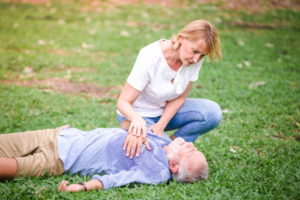
When doubtful, maintain your system simple and practiced as opposed to complex and corroded. High-quality compressions, very early defibrillation, clear communication, and steady leadership save lives. Programs assist you build those columns. Select the one that you will certainly sustain.